
Estate sale vs. auction is one of the most common questions families ask when it’s time to liquidate a home after the loss of a loved one, a major move, or years of collecting.

Should we have an estate sale or an auction?
The answer isn’t always straightforward. While both options help liquidate personal property, they work very differently and are suited to different situations.
Understanding the strengths of each can help you make a confident decision—and maximize both your return and your peace of mind.
What Is an Estate Sale?
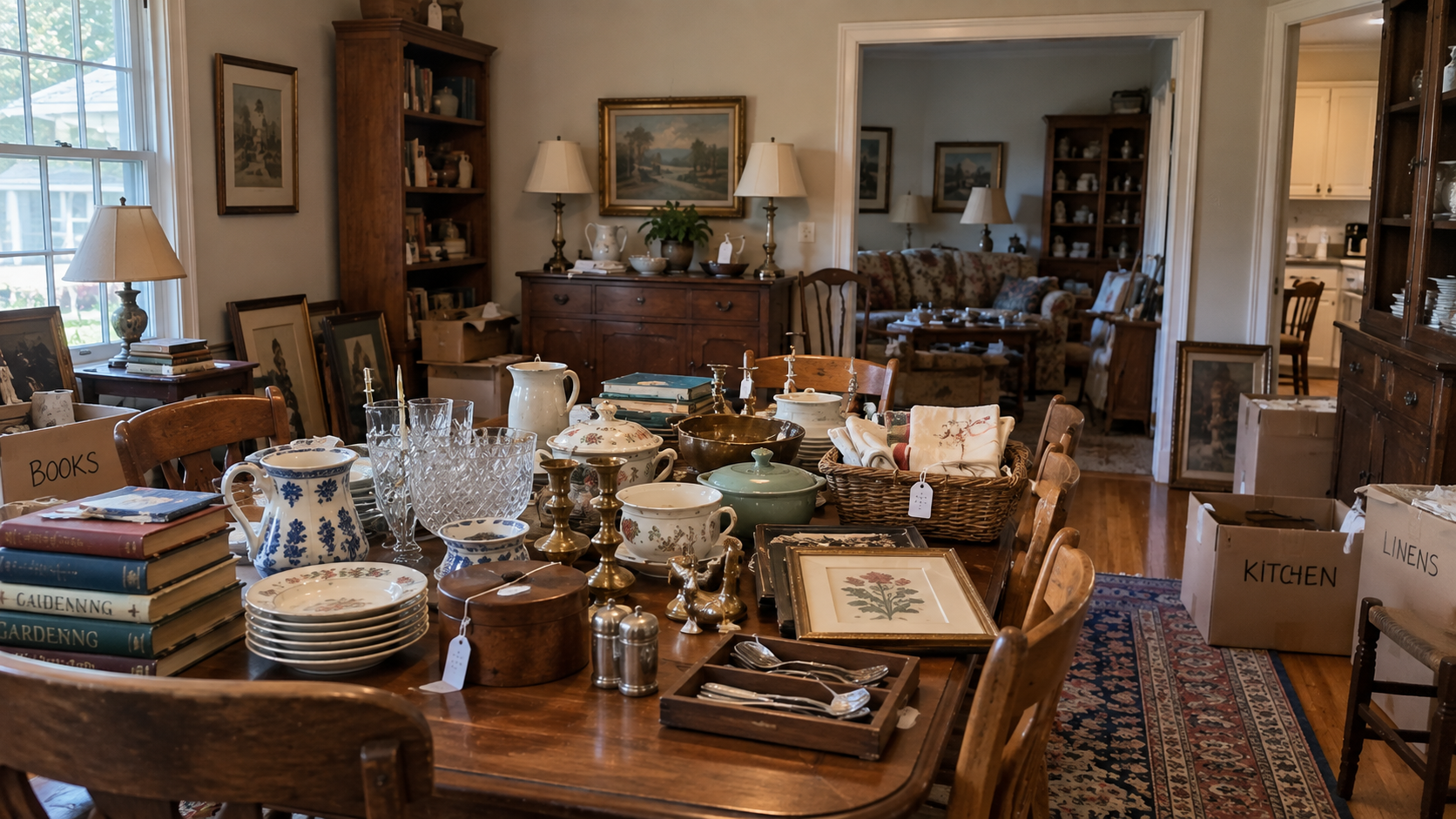
An estate sale is a professionally organized sale held inside the home. Items are researched, priced individually, and displayed so shoppers can browse and purchase them over the course of one or more days.
Estate sales often include:
- Furniture
- Antiques
- Artwork
- Jewelry
- Kitchenware
- Collectibles
- Household goods
- Tools
- Outdoor items
Because buyers can see everything in person, estate sales are an excellent way to sell an entire household while allowing family members to keep selected heirlooms before the sale begins.
What Is an Auction?
An auction sells property through competitive bidding rather than fixed prices.
Auctions may be held in person, online, or as a combination of both. Instead of assigning prices beforehand, the market determines what each item is worth based on bidder interest.
Auctions often work well for:
- Rare antiques
- Fine art
- High-end collections
- Farm equipment
- Vehicles
- Specialty or investment-quality items
Strong demand can sometimes push prices higher than expected, while more common items may sell for less than anticipated.
Estate Sale vs. Auction at a Glance
| Estate Sale | Auction |
|---|---|
| Items are individually priced | Items sell through competitive bidding |
| Usually lasts 2–3 days | Can be completed in a single event or online |
| Best for complete household contents | Best for rare or highly desirable items |
| Buyers shop at their own pace | Buyers compete against one another |
| Offers more pricing control | Final price depends on bidder demand |
When an Estate Sale Is Usually the Better Choice
An estate sale is often the best solution when you’re selling the contents of an entire home rather than just a few valuable pieces.
It may be the right choice if:
- The home contains furniture, décor, kitchen items, and everyday household goods.
- You’re preparing a property for sale.
- You want buyers to shop the home over several days.
- You’d like professionally researched pricing.
- You want an organized, welcoming shopping experience.
For many families, an estate sale offers the most practical balance between convenience, value, and efficiency.
When an Auction Makes More Sense
An auction can be an excellent choice when a property contains exceptional pieces likely to attract multiple interested buyers.
Examples include:
- Fine antiques
- Valuable artwork
- Rare collections
- Coins
- Firearms (where legally permitted)
- Classic vehicles
- Specialized equipment
Competitive bidding can produce excellent results when strong collector demand exists.
Can You Use Both?
Absolutely.
Many estates benefit from a combination of both approaches.
For example, exceptional antiques or specialty collections may be better suited for auction, while the remaining household contents can be sold through a professionally managed estate sale.
An experienced estate liquidation company can help determine which items fit each method and recommend the approach that best serves your family’s goals.
Questions to Ask Before Choosing
Before deciding, consider these questions:
- How quickly does the home need to be emptied?
- Are there rare or highly collectible items?
- Is maximizing convenience more important than maximizing the price of individual items?
- How much of the household will be sold?
- Are family members located nearby or managing everything from out of state?
Every estate is unique, which is why there isn’t a one-size-fits-all solution.
How Parker Place Helps Families Decide
At Parker Place Estate Sales & Noteworthy Finds, we believe families deserve honest guidance, not a one-size-fits-all recommendation.
During an initial consultation, we evaluate the contents of the home, discuss your goals, and explain the options available. If we believe an auction would better serve your needs, we’ll tell you. If an estate sale is the better choice, we’ll explain why.
Our goal is to help you make an informed decision with confidence and without pressure.
Final Thoughts
Choosing between an estate sale and an auction isn’t about finding a universally “better” option—it’s about finding the right fit for your situation.
With the right guidance, the process can be far less overwhelming than many families expect.
If you’re in the Dallas–Fort Worth area or central Alabama and have questions about the next steps, we’d be honored to help you explore your options.

Frequently Asked Questions
Can I keep some items before an estate sale?
Yes. Family heirlooms and sentimental belongings should always be set aside before pricing begins.
Do auctions always bring more money?
Not necessarily. Exceptional collectibles may perform well at auction, but many complete households achieve better overall results through a professionally managed estate sale.
How long does an estate sale usually take?
Most estate sales are held over two or three days, though preparation beforehand can take one to two weeks depending on the size of the estate.
Ready to discuss your situation?
Whether you’re planning ahead, managing a loved one’s estate, or preparing for a major downsizing, Parker Place Estate Sales & Noteworthy Finds offers thoughtful guidance and fully managed estate liquidation services. Contact us to schedule a no-obligation consultation and discover the approach that’s right for your family.